Utsav
Diwali / Lakshmi Puja / Chopda Pujan
Civil calendar, not tithi. These Gregorian dates are a starter set for sacred days. Local observance can differ by a day.
2026: 8 November 2026
Date to be confirmed for 2027
Many families tell of Rama's return to Ayodhya. After fourteen years of exile in the forest, and after Sita was carried off by Ravana, Rama, with Lakshmana, Hanuman and the vanara army, crossed to Lanka, defeated Ravana and brought Sita home. It was the new-moon night of Kartik. The people of Ayodhya lit rows of clay lamps along every road and rooftop so that their king would find his way home in the dark.
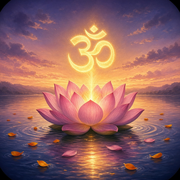
Many families also honour Lakshmi on this night. During the churning of the ocean of milk (Samudra Manthan), she rose from the waters seated on a lotus, and she chose Vishnu. Homes are cleaned and lit so that she will feel welcome, and Ganesha is worshipped first as the remover of obstacles. In Gujarati and merchant homes this is the night of Chopda Pujan: the old year's account books are closed, and new books are blessed with Shubh, Labh and a swastik.
Dipavali means "a row of lamps." The stories differ by region, but they share one idea: light over darkness, knowledge over ignorance and good over evil. It is also a night of gratitude for the year's provision and of honest accounts before a new beginning.
Scripture
Lead us from darkness unto light.
Interpretation
Our scriptures remind us that the true light we seek is not somewhere outside us, but resides within our very own being. It is our essential nature — Sat-Chit-Ananda: Infinite Existence, Pure Consciousness, and Eternal Bliss.
Just as the light of a Diwali lamp dispels the darkness around us, the light of Self-Knowledge dispels the darkness of ignorance, revealing our true nature — eternally pure, ever-conscious, and forever free.
May the blessings of the Divine, our Gurus, and the wisdom of our sacred scriptures guide us towards Self-Knowledge, inner peace, gratitude, and harmony.
May we recognize the same Divine Consciousness in all living beings and share love, compassion, kindness, and joy with everyone around us.
"Om Sarve Bhavantu Sukhinah" — May all beings be happy.
Scripture
"Tamaso ma jyotir gamaya", Brihadaranyaka Upanishad 1.3.28 Pavamana Mantra